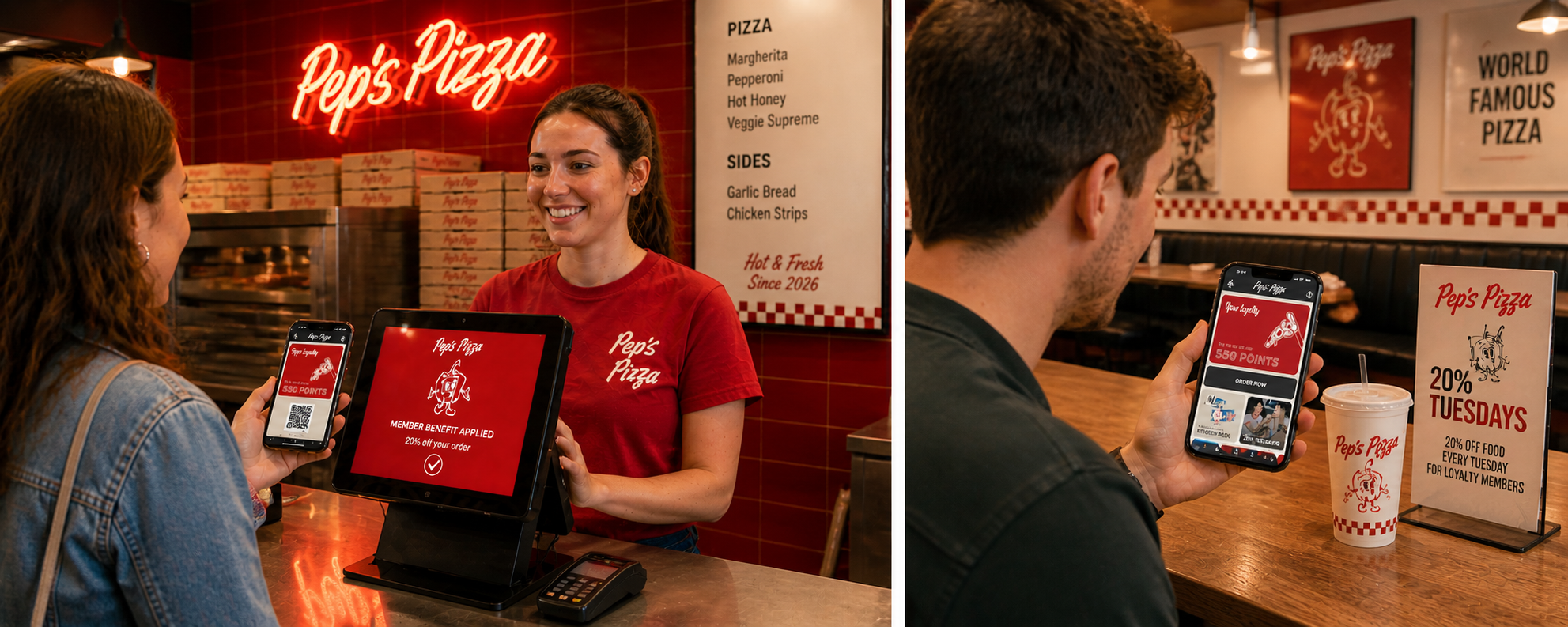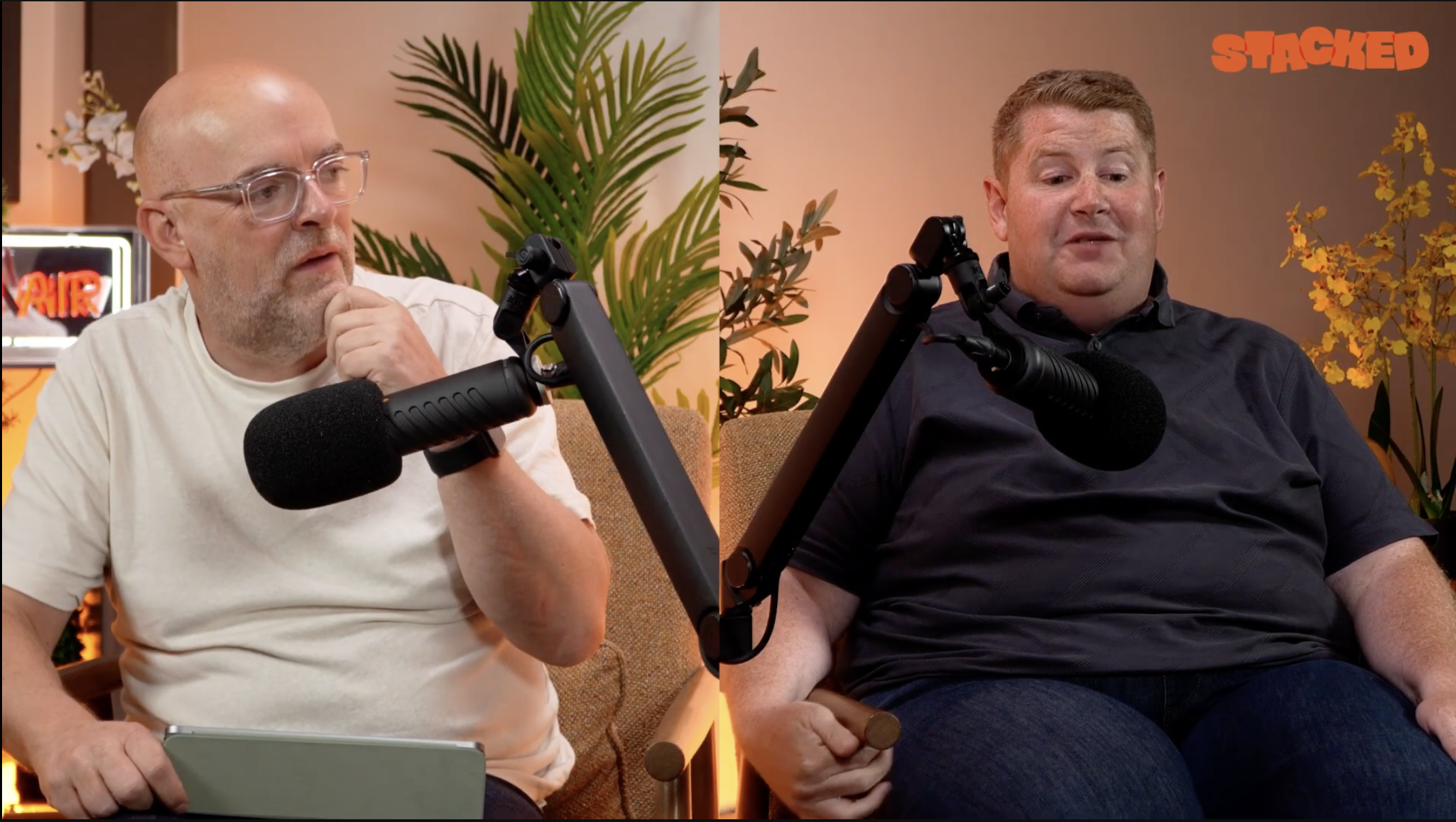
Let's be honest, sometimes loyalty schemes need a push to move the needle, but Prezzo's app is different. It's driving 8–10% of weekly revenue, growing week over week, and turning a £1.99 kids subscription into a frequency engine. Our partners at Stacked sat down with David Broom, CIO of Brava Hospitality, on The Stacked Podcast, hosted by Chris Fletcher, to find out how, and what you can steal from the playbook.
Note: You can find the full episode of The Stack Podcast with David Broom, at the end of this article, don’t miss giving it a listen!
Here's the full breakdown of the conversation, stat by stat.
Half a Million Members and Still Climbing
Prezzo's app went live on 2nd June 2024 and it just hit its first anniversary. The growth since launch has been remarkably steady.
- 500,000+ members and counting
- 5,000–10,000 new signups every single week
- Record app-driven revenue hit three weeks in a row
What's driving the signups? It's not one thing. Table materials prompt guests to join. Front-of-house staff talk it up. Order-and-pay-at-table nudges people toward signup naturally. External campaigns and new in-app features keep the momentum going.
The lesson is simple: loyalty doesn't need a blockbuster launch moment. It needs a consistent, multi-channel drumbeat, and a product that's actually worth joining.
How the Loyalty Mechanics Work
Prezzo didn't build a points-based scheme. They built a visit-frequency model: the more you come, the more you earn.
Here's the structure:
- Member pricing from day one: Join the club and certain dishes are cheaper, every visit. The most popular dish, carbonara, is a couple of quid less for members. Think Tesco Clubcard pricing, applied to pizza.
- Tiered rewards: Bronze, silver, and gold tiers open up as visit frequency increases, with benefits like two-for-one cocktails, cheaper meal specials, and more.
- Surprise offers: A strong £10-off offer dropped to the right customer segment has been growing week on week.
Here's the part that matters most: app customers come in for a lower discount than almost any other channel Prezzo uses. Most offers demand a deeper cut to get someone through the door. App members engage for less, which means better margin per visit.
That's real loyalty. They're not coming for the deal. They're coming for the brand and the food.
8–10% of Weekly Revenue, On Repeat
This is the number that stops people in their tracks.
8–10% of Prezzo's weekly revenue is driven by someone walking in with a loyalty offer. This has been consistently growing since launch, with week-on-week record breaking numbers. Their guests continue to engage because they always have a reason to.
Prezzo had offer-related revenue before the app: two-for-ones, CRM blasts, the usual hospitality discount toolkit. But the app is bringing in a slightly different group of customers and bringing them back more frequently. Full-paying guest numbers haven't dropped. The app is additive, not cannibalistic.
Put that in context: if you're running 100 sites and making tens of millions in annual revenue, 8–10% from a single, measurable, growing channel is a serious line on the P&L, not a marketing cost.
The Revolutionary Subscription
Subscription in hospitality has a chequered reputation. Plenty of brands tried it, plenty walked away. Prezzo went all in on a specific, well-scoped version, and it's paying off.
The offer: £1.99 a month. Up to three kids eat free. One adult has to pay for a main.
The numbers so far:
- 7,500 subscribers currently active
- Heading toward 10,000 by end of summer
- Roughly £200k/year in subscription revenue alone, before you count the dine-in spend it drives
- School holidays are the growth engine, as you'd expect
But the subscription fee is the small number. The big number is frequency.
Subscription holders visit 3–4 times more often than they would have without it. And they spend more on top: drinks for the kids, drinks for the adults, extras that add up across those extra visits.
It's not hurting the business either. They're not coming every day. They're coming more regularly, spending more each time, and generating margin on every visit because the adult is always paying for a meal.
This is smart commerce: a genuinely good discount that still requires a paying customer in the door. No heavy two-for-one. No margin-destroying blanket offer. Just a clear reason to come back.
The model works because it's specific. Prezzo's kids version fits their brand, their margins, and their guests. Pepper gives you the flexibility to build something tailored to your needs: a coffee pass for a cafe, a lunchtime deal for a QSR, a members' happy hour for a pub. The point is ,you need an offer that fits your operation, and a way to test it, measure it, and scale what sticks. That's exactly what we built our subscription feature to do. If you're weighing up whether subscription could work for your operation, we're here to help!
Converting Free Holiday Offers Into Paid Subscribers
Here's where it gets clever. Prezzo has always offered kids-eat-free during school holidays, like most brands. This year, they changed the play.
Instead of just giving the free meal, they offer a free month of the subscription to holiday guests. Try it. See if you like it. Then the paid cycle kicks in.
It's a classic funnel: free trial to paid conversion, applied to a hospitality context where most operators are still thinking in terms of one-off vouchers. The result is a customer who's not just visiting once for a freebie, but who's now in a recurring relationship with your brand.
Compare that to what most brands do: hand out a free meal, hope they come back, lose track of them. Prezzo turns the free meal into a trial, and the trial into a subscriber.
The Father's Day Experiment
Prezzo isn't stopping at kids. For Father's Day, they sold a prepaid subscription: three pints of Carlsberg (their house beer) whenever dad comes in. A product-based gift, not just a voucher with cash on it.
Some experiments work. Some don't. The point is the team is shipping and learning. They're already looking at bringing the beer subscription back for another occasion, and exploring partnership opportunities. Think bank accounts or membership schemes that bundle a weekly Prezzo pass as a perk.
The philosophy is simple: come up with an idea, build a good first version, trial it, and scale what works. If it doesn't land, don't do it again. No months of over-engineering before launch.
Order and Pay at Table: The Surprise (and the Non-Surprise)
When Prezzo wrote the business case for the app, they expected order-and-pay-at-table to be the big win: higher average spend per cover, more upsell opportunity.
The reality? About 5% of customers order and pay at table, spending roughly £1 more per cover. That number hasn't really moved, and Prezzo isn't forcing it. It's the natural rate of Prezzo customers who want to order online without any prompting.
It's a useful lesson for any operator. Not every part of the business case plays out the way you expect. The loyalty revenue was the surprise winner. Order-and-pay is a steady, modest contributor. Both are fine, but you only know which is which once you launch and measure.
CRM, Automation, and the Data Engine
The app isn't sitting in isolation. It's fully integrated with Prezzo's CRM, natively, out of the box. That's one of the reasons they chose the platform.
That integration powers real automation:
- Lapsing customer detection. If a subscription user stops coming, the system flags it and triggers a re-engagement message.
- School holiday reactivation. Customers who joined for the last holidays get contacted as the next break approaches.
- Segmentation by subscriber status. The team can see exactly who's a subscription customer and tailor communication accordingly.
The result is a data engine that doesn't just collect information. It acts on it. And it's feeding into Prezzo's Google review scores, which have picked up significantly this year thanks to in-app review prompts tied to loyalty usage.
The Flywheel: Discounts Drive Visits, Visits Drive Reviews, Reviews Drive New Guests
Here's the loop David and Chris landed on, and it's worth spelling out because it's the whole thesis:
- A modest, smart discount gets a loyal customer through the door
- That visit generates more spend than the discount costs
- The happy customer leaves a review, pushing up Google scores
- Higher Google scores drive more new guests to try the brand
- Some of those new guests join the loyalty scheme and the cycle repeats
It's feeding itself. And every turn of the wheel compounds, because the discount is smaller, the margin is better, the reviews are genuine, and the customer relationship is deeper than a one-off voucher ever creates.
What You Should Take From This
If you're weighing up loyalty, subscription, or app investment, here's what Prezzo's numbers tell you:
- Loyalty can be a serious revenue line, not just a marketing cost. 8–10% of weekly revenue is real money.
- Frequency beats discount depth. Your best customers will come back for less, not more.
- Subscription works when it's scoped well. A £1.99 kids offer with a paying adult is smart commerce, not a margin trap.
- Ship fast, measure, scale what works. Don't spend months perfecting the tech before you've tested the concept.
- Integrate with your CRM. Loyalty data is only valuable if it drives automated, segmented action.
Prezzo isn't a tech company. They're a hospitality business that decided to behave like a smart commerce operation, and the numbers are speaking for themselves.

Try Pepper today
Designed to showcase the power of PepperOS, this interactive demo provides and example of the insights and tools we’re currently providing to 200+ high street brands.