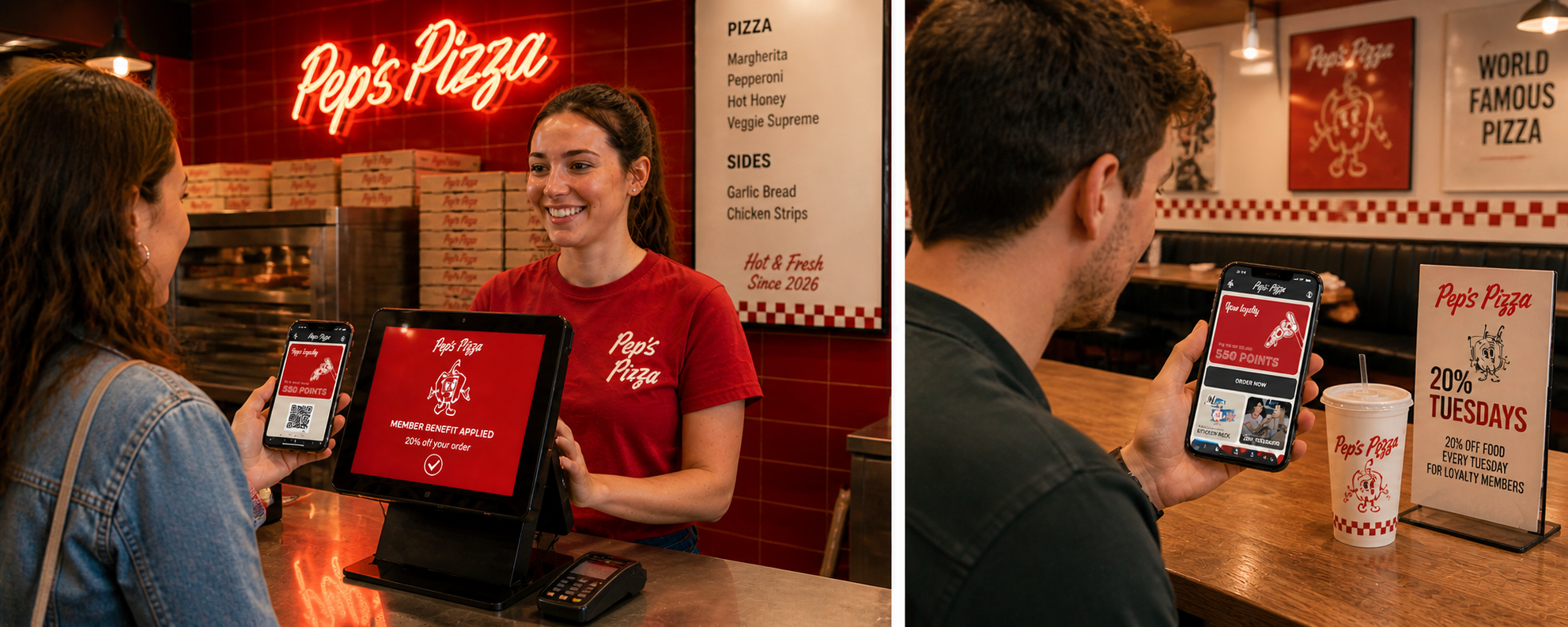
itsu's app is proof that phone real estate goes to the brands people love. Their loyalty members visit three times more often than non-loyalty customers. Their free gyoza acquisition campaign shot the app to #1 in the food and drink category on the App Store. And after a rewards revamp in late 2024, frequency has grown significantly.
Chris Fletcher sat down with Katie Grundy, CRM & Loyalty Manager at itsu, on The Stacked Podcast to unpack how the program works, what changed when they revamped the rewards, and what other operators can learn from it.
Note: You can find the full episode of The Stacked Podcast with Katie Grundy, at the end of this article, don’t miss giving it a listen!
Here's the full breakdown, stat by stat.
Retail vs Hospitality: A Different Kind of Loyalty
Katie's path to hospitality is not the typical one. She spent her career before itsu in fashion and beauty, most recently at L'Oreal, doing the same kind of work: CRM, loyalty, segmentation. The principles are the same, she says. The metrics are the same. The big difference is the human element.
In e-commerce, you're behind a product. In hospitality, you're behind an experience. Someone comes in with their family, sits down, enjoys the food, and a memory is created. That's not something you can replicate with a parcel in the post.
That human connection shapes everything about how itsu approaches loyalty. There are two layers: transactional loyalty (people visit, get rewarded, come back) and emotional loyalty (the long-term connection you build through the team, the experience, and the feeling of being heard). Most schemes stop at transactional. itsu is aiming for the step above.
The culture comes from the top, itsu operates on a large scale but in a very local way. That combination is what makes the loyalty program stick.
Around 80 Locations and a Stamp Card That Works
itsu operates roughly 80 shops across the UK, mostly owned rather than franchised. The loyalty program is built on a simple, proven mechanic: a stamp card model.
Here's how it works:
- Spend £5 or more and you get a stamp
- Sign up and download the app and you get a free miso or edamame to start
- 3 stamps gets you a free snack or drink
- 5 stamps gets you free gyoza
- 7 stamps gets you a free meal (the most popular reward, by far)
- Plus free gyoza on your birthday, app-exclusive pricing, and surprises along the way
The app has been live in its current form since 2024. It got a full revamp at the end of 2024, with new rewards and a new identity. More on that shortly!
The simplicity is the point. No points, no complex tiers, no confusion. Spend, stamp, reward. Customers get it instantly and staff can explain it in one sentence.
#1 in the App Store: The Free Gyoza Campaign
In July 2024, itsu ran an acquisition campaign with a simple offer: download the app, get free gyoza. No catch.
The results exceeded every expectation:
- #1 in the food and drink category on the App Store
- Shot up the general App Store rankings as well
- People were physically queuing by the fridges waiting for gyoza to come out
- Significant influencer coverage and social buzz
- A major footfall driver into the shops, not just an app download play
The campaign worked because it was genuinely free. No hidden spend requirement. No complicated redemption process. Download the app, walk in, get gyoza. That kind of simplicity cuts through the noise.
For operators thinking about acquisition, the lesson is clear: make the offer real, make it instant, and make it something people actually want.
The Rewards Revamp: Listening to Customers and Staff
After the app had been live for a year, itsu did a full review. Three things stood out:
- A pot of very frequent customers who loved the app
- A larger group who downloaded the app but rarely used it, sitting at low frequency
- Customer survey feedback that the rewards weren't generous enough
The old rewards were a free meal on sign-up, a free snack, and a free can of water. The water was the problem. Even though it was itsu's Zen water (a genuinely good fruity water), customers didn't value it as a reward. They wanted something more generous.
But the feedback didn't just come from customers. Katie and the team spoke to shop teams directly. In a shops-first business, the front line knows what's happening on the ground. The shop teams told them the app didn't even have a name. It was just called "the itsu app." When a customer asked, "What does the app do?", the team couldn't give a clear answer.
So itsu made three changes:
- Renamed the app to itsu rewards. Instantly clear. You hear the name, you think, something free.
- Added a tagline: "The more you itsu, the more we give you." Simple value exchange. The more you come, the more you get.
- Made the rewards more generous. Free gyoza at 5 stamps, free meal at 7, free gyoza on your birthday, and app-exclusive pricing on new launches.
The impact? Frequency has grown significantly since the revamp. The shop teams finally had tools to sell the app. The conversations got easier. The value exchange became crystal clear.
Three Times More Often: The Frequency Number That Matters
Here's the stat that matters: itsu's loyalty members visit three times more often than non-loyalty customers.
That's not organic. It's the result of a year of focused work on the scheme, building the foundations through CRM, lifecycle messaging, and segmentation. itsu has a naturally loyal customer base, but the app has taken that loyalty and turned it into measurable, predictable frequency.
And that frequency is resilient. Across hospitality, itsu sees the usual fluctuations: weather, train strikes, seasonal dips. But app customers just keep coming back. They've got, as Katie puts it, "quite a linear approach to life with us."
For operators, that's the real value of loyalty. It's not about the discount you give. It's about the frequency you drive. A customer who comes back three times more often is worth far more than the cost of a free meal every seven visits.
UK research cited in the podcast found that loyal regulars can generate up to five times more annual revenue for a local business. That's the prize.
The Kings Road Customer and the Power of Local
itsu's loyalty isn't just digital. It's rooted in the local relationship between a shop and its regulars.
Katie points to the itsu on Kings Road. Those customers come in day in, day out. They're loyal whether there's an app or not. The aim is to get those people using the app and getting rewards that way, rather than itsu doing blanket discounts through other channels. The app gives itsu more control over the data and how they message customers after the visit.
This is a crucial shift for operators. Blanket discounts treat every customer the same. A loyalty app lets you reward your best customers specifically, understand their behaviour, and talk to them directly. You're not paying for acquisition you've already earned. You're investing in the customers who already love you.
Personalisation: The Journey, Not the Destination
itsu has gone on a real journey with personalisation and they've come a long way.
The biggest learning? How different itsu's customers are from each other.
A city worker grabbing lunch on a Tuesday is a completely different customer from a family in the suburbs coming in on a Saturday. Same brand. Same app. Very different behaviour. itsu has built customer personas to bring this to life, linked to real people in the office so the team can relate to them.
The personalisation so far is practical: talking to breakfast customers differently to non-breakfast customers, tailoring comms by location, building lifecycle programs for the first-to-second visit journey. It's not flashy. It's fundamental.
Katie sees the future going further. Imagine walking up to a kiosk, scanning your app, and seeing a menu tailored to you, with offers personalised to your preferences. That's where she'd love itsu to be. The tech is getting closer.
Transactional vs. Emotional: How itsu Balances the Two
Not every customer is the same, and itsu doesn't treat them the same.
For less frequent customers, the scheme does the heavy lifting. The stamp card drives visits. The CRM back end handles the first-to-second visit journey, re-engages people who downloaded the app but haven't come back, and nudges them toward that free meal at seven stamps. By the time they get there, they love it enough to keep coming back.
For the top customers, it's about human connection. itsu's customer services manager phones customers directly to ask about their experience. If they run a competition, they'll bring the winner into the shop for a picture with the manager. They survey constantly. They want to know what people think.
That's the emotional loyalty layer. It's what turns a frequent visitor into a lifelong one. And it's something most operators could start doing tomorrow.
Working with Pepper: The Operator Leads the Roadmap
itsu uses a Pepper-powered app, fully branded as itsu rewards. From a customer perspective, you'd never know Pepper was behind it. And Katie is clear: the relationship is a partnership, not a vendor arrangement.
"We work very closely with the guys at Pepper and they really do try hard to make things work for us or find a solution if they don't have one already. We try and be collaborative with them in terms of bringing them on board with our strategy really early on. We're already thinking about next year now and already having those conversations with them, and that helps them know what we're thinking in terms of how our roadmaps can come together."
The team at itsu challenges Pepper constantly. They bring their strategy to the table early, already thinking about next year, and work with Pepper to align roadmaps. The result is that itsu's direction shapes the product, not the other way round.
As Katie puts it: a lot of the time they ask for something and Pepper says, "Several other people have asked for this already." There's a lot of crossover across the brands Pepper works with, which makes the development cycle faster for everyone.
For operators, the lesson is simple: sweat your tech. Don't just buy what's off the shelf and roll with it. Bring your strategy, push your supplier, and make the product work for your roadmap. If you're not shaping the tech, the tech is shaping you.
AI: Happening in the Cracks, Not the Headlines
You can't talk about tech in 2026 without mentioning AI. But Katie's take is grounded and practical.
AI is already showing up in itsu's CRM platform, recommending ways to use data that a lean team wouldn't have the capacity to think of. It's not a big glorious ROI moment. It's efficient. It's enabling small teams to get closer to the work they want to do but don't have the bandwidth for.
As Chris noted from an MCA conference: nobody can really prove ROI on AI yet. But that's where it's happening. In the bits, in the teams, in the cracks between the work. It's not replacing humans. It's giving humans capacity.
There will always need to be human input. But AI as a tool, working alongside lean teams, is already making a difference.
What You Should Take From This
If you're weighing up loyalty, app investment, or a rewards revamp, here's what itsu's numbers tell you:
- Frequency is the prize. Three times more visits from loyalty members is the metric that matters, not download count.
- Make the value exchange obvious. A clear name, a clear tagline, and rewards people actually want.
- Listen to your shop teams. They know what's happening on the floor. If they can't explain your app, your customers can't either.
- Don't stop at transactional. The phone call to a top customer, the picture with the manager, the human connection. That's what builds emotional loyalty.
- Sweat your tech. Bring your roadmap to your supplier. Shape the product. Don't let the product shape you.
- AI is a tool, not a headline. It's giving lean teams capacity they didn't have. That's the real ROI right now.
itsu is a hospitality business that decided to build loyalty the right way: simple mechanics, generous rewards, and a genuine relationship with every customer who walks through the door. And it paid off for them.
If you’re looking to increase your repeat visits, and build a loyalty program that makes an impact - just like itsu, the Pepper team would love to help.
Book a demo with us today, to learn about how we can help you achieve your loyalty goals.

Try Pepper today
Designed to showcase the power of PepperOS, this interactive demo provides and example of the insights and tools we’re currently providing to 200+ high street brands.